
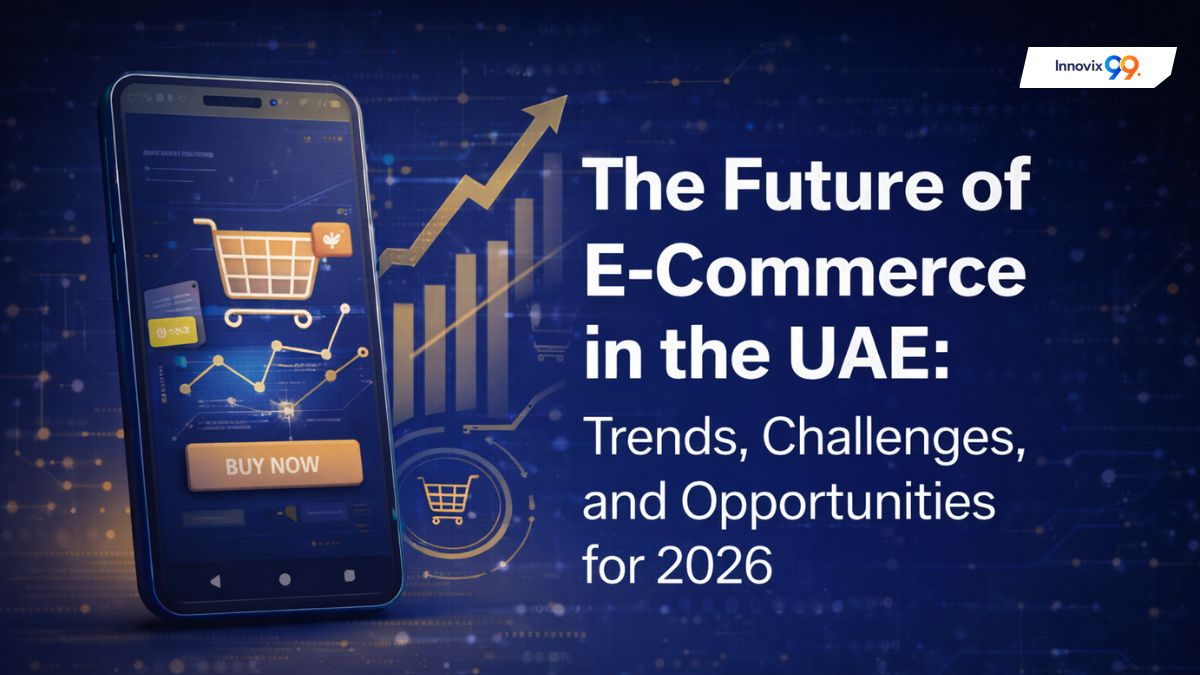
The future of e-commerce in the UAE is at a transformative stage, where technology, changing consumer behavior, and government digital initiatives are reshaping how people shop online. By 2026, the UAE e-commerce market will become smarter, more personalized, and more interconnected, positioning the country as a leader in digital trade in the region.
Current State of the UAE E-Commerce Market
The future of e-commerce in the UAE is built on a strong foundation. High internet penetration, widespread smartphone usage, and advanced digital payment systems have significantly accelerated the growth of e-commerce in the UAE. Abu Dhabi’s e-commerce market is expanding rapidly due to government-led digital transformation initiatives, while mobile-first shopping continues to gain momentum in Dubai. As we move toward UAE e-commerce trends in 2026, online shopping is no longer just about convenience, it is about experience, speed, and reliability.
UAE E-Commerce Market Size and Growth Projections
The UAE e-commerce market is rapidly expanding and is projected to reach USD 27 billion by 2026, growing at a CAGR of 15% from 2023 to 2026. According to the latest UAE E‑commerce market growth report, the sector reached AED 32.3 billion in 2024 and is expected to grow significantly over the next decade. Mobile commerce drives over 60% of online sales, while social commerce contributes nearly 20% of total e-commerce revenue. Cross-border e-commerce accounts for approximately 30% of online purchases, with electronics, fashion, and beauty products being the top-selling categories.
Government initiatives, including Smart Dubai and the UAE Digital Economy Strategy, are fueling digital adoption, making the UAE one of the fastest-growing e-commerce markets in the Middle East. For a deeper look at how Dubai’s digital economy programs are accelerating e‑commerce adoption, see the Dubai digital economy overview. These statistics highlight the scale and opportunities available for startups, SMEs, and large enterprises looking to expand in the UAE e-commerce sector.
Key E-Commerce Trends Shaping the UAE in 2026
Artificial intelligence is changing the future of online trading. Predictive e-commerce analytics platforms use AI to forecast customer behavior, predict demand, and optimize inventory management. AI-powered product recommendations will create more personalized shopping experiences and improve both conversion rates and customer loyalty.
Mobile and Social Commerce are Taking Over
Mobile commerce in the UAE continues to grow rapidly as consumers use smartphones to shop, make payments, and track deliveries. Recent industry analysis shows that over 75 % of e‑commerce transactions in Dubai occur via smartphones, confirming the mobile‑first trend. At the same time, social commerce in the UAE, buying directly through platforms like Instagram, TikTok, and WhatsApp, will become a major revenue channel, especially for SMEs and D2C brands.
Omnichannel and Customer-Centric E-Commerce Models
The brands that succeed will build customer-centric e-commerce models supported by strong omnichannel strategies. Seamless integration between online stores, physical retail outlets, marketplaces, and social platforms will define the next phase of the UAE online retail market.
E-Commerce Opportunities in the UAE Market by 2026
The e-commerce potential of the UAE is huge.
- The future of cross-border ecommerce in the UAE will be improved as the country will be stronger as a logistics and re-export hub.
- By adopting smart e-commerce systems, companies will be able to scale faster through data-driven e-commerce strategies.
- Innovations such as buy-now-pay-later (BNPL) services and blockchain-based digital payments in the UAE will reduce friction in online shopping.
- AI-powered logistics optimization will enable faster deliveries, real-time tracking, and lower fulfillment costs.
- Building scalable e-commerce infrastructure will be essential for both startups and enterprises seeking long-term growth.
According to regional analysis, cross‑border transactions and mobile shopping are major drivers of regional e‑commerce growth, especially in the Gulf and MENA.
Challenges Facing E-Commerce Businesses in the UAE
Despite this growth, several e-commerce challenges in the UAE remain for businesses: Raising the cost of customer acquisition on online competitive websites.
- Security and privacy concerns of information.
- The effectiveness of last-mile delivery.
- Surpassing the demands of high-speed delivery.
The demand for using automation in e-commerce activities and AI-based customer experience solutions among companies will counter the challenges.
The Future of Digital Commerce in the UAE
By 2026, the e-commerce market in the UAE 2026 will be more intelligent, faster and more forecast-oriented. The competition will be beaten by the brands, which will invest in the next generation of ecommerce technology, personalization and analytics. The actual E-commerce Future UAE will be the introduction of intelligent, AI-based, and omnichannel commerce.
Final Thoughts
The future of e-commerce in the UAE is not just about selling products online, but also building smart, connected and customer-oriented digital ecosystems. Innovative companies would be in the best position to lead the e-commerce revolution in the UAE in 2026 and beyond.
FAQs
What is the e-commerce future of the UAE?
The future of e-commerce in the UAE is very bright; it is fueled by AI, mobile commerce, digital payments and high support for digital transformation by the government.
What do you see as the best e-commerce trends in the UAE by 2026?
The important trends are AI-based personalisation, social/ mobile commerce, omnichannel retail, accelerated logistics, and data-based customer experiences.
What is the speed of the expansion of e-commerce in the UAE?
E-commerce has been increasing at double-digit rates annually in the UAE, which has been sustained by high internet penetration and a rising level of consumer confidence in internet shopping.
What are the challenges facing e-commerce businesses in the UAE?
High competition, increased marketing expenses, efficiencies of the last-mile delivery, cybersecurity issues, and customer retention are major challenges.
What are the opportunities facing an e-commerce startup in the UAE?
These opportunities are niche D2C brands, cross-border ecommerce, social commerce, AI-driven platforms, and new logistics and payment solutions.
What role does AI play in transforming e-commerce in the UAE?
The AI is enhancing product suggestions, demand prediction, customer care automation, customised marketing, and general shopping.
What will be the major areas of UAE ecommerce in 2026?
It is estimated that fashion, electronics, groceries, beauty, health products and quick-commerce services will be the major drivers of UAE ecommerce.
Will e-business be profitable in the UAE in 2026?
Yes, e-commerce can indeed be very lucrative in 2026, when businesses optimise their work, apply AI tools, and are customer-oriented.
What is the effect of digital payments in the UAE on e-commerce?
E-commerce friction is lowered, conversions are enhanced and customer confidence is boosted by digital wallets, BNPL service and secure online payments.
What is the role of logistics in the e-commerce development of the UAE?
Using AI-driven fulfilment and efficient logistics has the potential to make e-commerce successful in the UAE, it accelerates deliveries, reduces expenses, and improves the scaling process.