
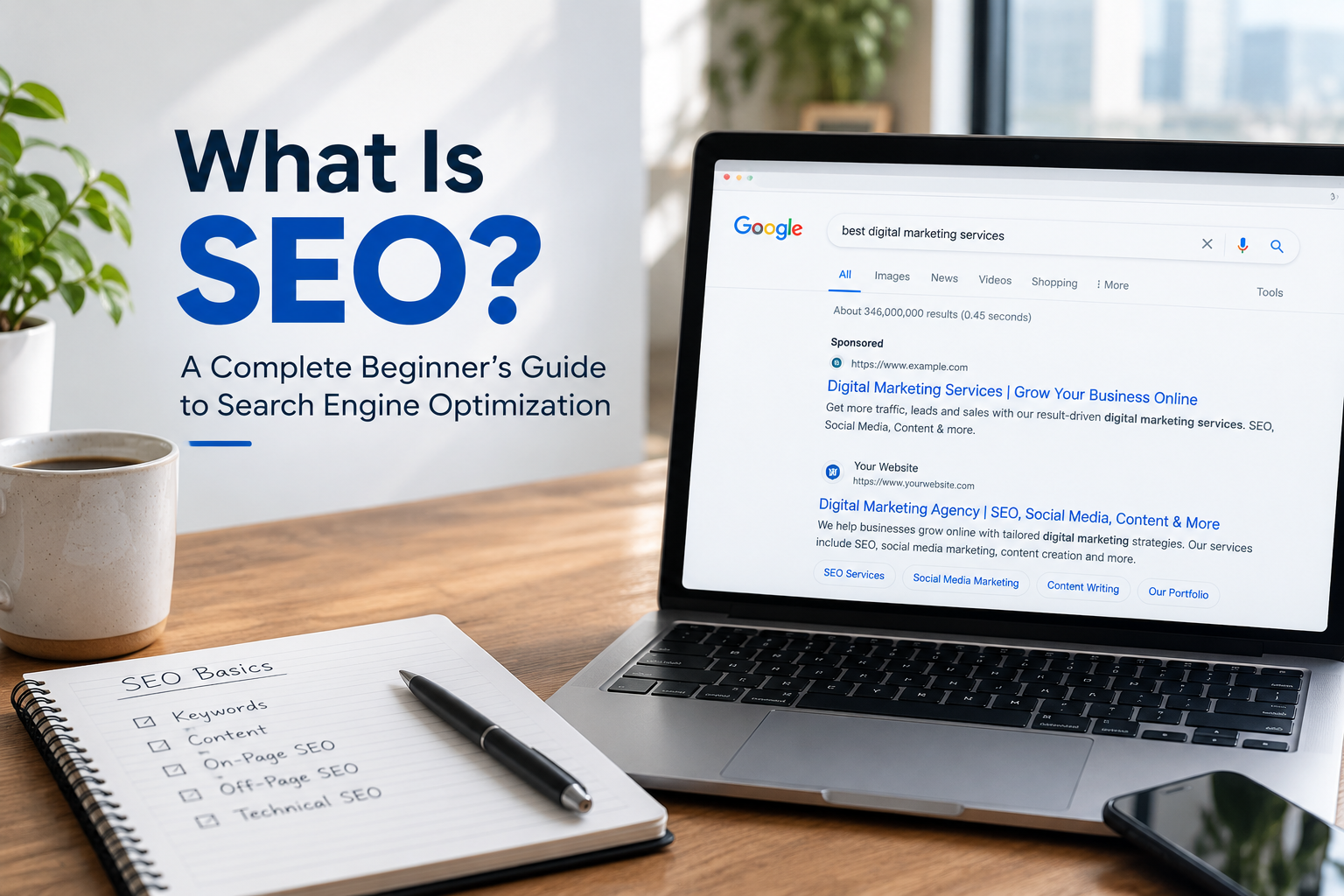
When people search for anything on the internet using search engines, they are taken to websites that have the most relevance to what they are looking for. SEO ensures that your website is visible to search engines and the right people see it. Good SEO is not keyword stuffing but consists of good content, technical viability, search intent, internal linking, authority and good user experience. SEO helps businesses get more visibility and attract those people who are looking for similar products and services.
What Is SEO?
Search engine optimization refers to the process of optimizing the website or content on the website so that search engines can understand it, recognize it and rank it accordingly based on the searches that users conduct. Every time a search is conducted through search engines such as Google a number of variables are considered by the search engines. Search engine optimization makes your site relevant to those searches.
What Does SEO Stand For?
SEO is the acronym for Search Engine Optimization. Each word describes a key part of the process:
- Search. Users enter queries in search engines.
- Engine. Search engines crawl, process and organize the content of the web.
- Optimization: Website owners make their sites and content more useful, accessible and relevant.
SEO is primarily about unpaid organic search results. Its not just about ranking for more keywords. The objective is to attract the right visitors and to give useful experiences to them.
How Does SEO Work?
A simple way to understand SEO. These stages help explain how search engines process webpages.
- Crawling
- Indexing
- Ranking
- Search Results
Why Is SEO Important?
SEO can provide several benefits for websites and businesses.
- Increases Organic Visibility
- Helps Attract Relevant Visitors
- Builds Long Term Traffic
- Supports Brand Discovery
- Generates Leads and Sales
- Can Reduce Dependence on Paid Advertising
- Reaches Users With Existing Demand
What Are the Main Types of SEO?
SEO includes several connected areas. The most common categories are:
- On-Page SEO
- Technical SEO
- Off Page SEO
- Local SEO
- E-commerce SEO
What Are the Most Important SEO Ranking Factors?
Search engines use many systems and signals to determine which results are useful. These signals change over time. So it is better to focus on broad SEO principles rather than trying to follow a fixed list of ranking factors.
Helpful, Relevant Content
Content should answer the user’s question or solve their problem. It should match the search intent behind the query. For example someone searching “what is technical SEO” probably needs an explanation. Someone searching “SEO agency Dubai” may be looking for a service provider. The content should reflect that difference.
Website Quality and Experience
Users should be able to navigate your website easily. Consider:
- Mobile usability
- Page performance
- Clear navigation
- Readability
- Accessibility
- Useful page layouts
A technically impressive website can still perform poorly if users cannot easily use it.
Links and Authority
Links from relevant and trustworthy websites can help search engines understand the reputation and relationships surrounding a website. Quality matters more than simply collecting large numbers of links.
Technical Accessibility
Search engines need to access important pages and understand their content. Technical problems can interfere with:
- Crawling
- Indexing
- Rendering
- Page relationships
Technical SEO helps reduce these barriers.
Relevance to the Search Query
Search engines need to understand what a page is about. Content, entities, topics, language, context and page structure can all help communicate relevance. This is why simply repeating an exact keyword is not an effective SEO strategy.
What Is Keyword Research?
Keyword research is the process of finding the search terms and queries people use when searching for information, products, services or solutions Keywords can help you understand what your audience wants to find. Important keyword concepts include:
Search Volume
Search volume is an estimate of how many times a certain query or keyword is searched for. More volume doesnot mean better. A keyword with a lower volume could have more business value if it attracts highly relevant visitors.
Search Intention
Search intent is what the user is trying to do with a search. Keywords matter when you’re selecting keywords.
Difficulty of Keywords
Keyword difficulty is an estimate that SEO platforms use to estimate how competitive a keyword might be. It’s not a Google universal metric.
Long-Tail Keywords
Long-tail keywords are usually more specific search phrases.
For example:
“SEO” is broad.
“SEO for small businesses in Dubai” is more specific.
Specific searches can sometimes have clearer intent and lower competition.
Types of Search Intent
Informational
The user wants information.
Example: “What is SEO?”
Navigational
The user wants a specific website or page.
Example: “Google Search Console login”
Commercial Investigation
The user is comparing options before making a decision.
Example: “best SEO tools for small business”
Transactional
The user is ready to take an action.
Example: “buy safety shoes UAE”
Understanding these differences helps you create pages that satisfy the actual purpose of the search.
How to Do SEO Keyword Research
Beginners can follow a simple process.
1. Identify Your Target Audience
Understand who you want to reach. Consider their:
- Problems
- Needs
- Questions
- Products
- Services
- Search behavior
2. List Topics Related to Your Business
Start with broad topics. For example a web development company might identify:
- Web design
- Web development
- SEO
- E-commerce
- WordPress
- Website maintenance
3. Find Relevant Keywords
By using keyword research tools, you can find the keywords related to the following subjects. You have to look for relevant options rather than finding hundreds of unrelated keywords.
4. Search Intent Analysis
Think about what someone expects from searching this keyword. Then write down the content to fulfill the expectation.
5. Review Competitors
Study the pages ranking for your target searches. Look for:
- Topics covered
- Content gaps
- Page structure
- Search intent
- Internal links
- Useful information
Do not simply copy competitors.
6. Group Keywords by Topic
Group closely related keywords into logical topic clusters. This can prevent you from creating multiple weak pages targeting almost identical searches.
7. Prioritize Realistic Opportunities
Consider:
- Relevance
- Search intent
- Competition
- Existing authority
- Business value
- Search demand
8. Create Content Around Those Topics
Build useful pages that address the user’s needs. The keyword should guide the content. It should not control every sentence.
What Is On Page SEO?
On Page SEO relates to the optimization of each webpage.
Title for SEO
A title assists both users and search engines in comprehending what the page is all about. Use titles that describe the page properly do not add many keywords in one single title.
Meta Description
A meta description is a short description of your page. It may help you get more clicks even though it does not directly rank the page in any manner.
H1, H2 and H3 Headings
Headings organize content. A clear structure helps users scan long articles.
For example:
H1: What Is SEO?
H2: How Does SEO Work?
H3: Crawling
H3: Indexing
Use headings to organize topics logically.
URL Structure
Keep URLs descriptive and understandable.
For example:
/what-is-seo/ is clearer than a URL containing random numbers or unnecessary parameters.
Keyword Placement
Use relevant keywords naturally. Important areas may include:
- Page title
- Main heading
- Subheadings
- Body content
- URL
- Image ALT text where appropriate
Do not force keywords into every paragraph.
Internal Linking
Internal links connect pages within the same website. They can help users discover related content and help search engines understand relationships between pages.
For example an article about SEO basics could link to a detailed guide about technical SEO.
Image Optimization
Optimize images by:
- Using descriptive filenames
- Adding useful ALT text where appropriate
- Compressing images
- Using suitable formats
- Avoiding unnecessarily large files
Content Quality and Search Intent
High quality content should answer the users actual question.
It should be:
- Useful
- Accurate
- Original
- Well-structured
- Easy to understand
- Relevant to the query
What Is Technical SEO?
Technical SEO is about ensuring your site is accessible, crawlable, understandable and performant.
Important aspects include:
Crawlability
Search engine crawlers should be able to access important pages.
Indexability
Important pages should be technically indexable where appropriate.
XML Sitemap
An XML sitemap is a file that contains a list of important URLs of a website to help search engines crawl the site better.
Robots.txt
The robots.txt file is used to provide crawling instructions. It needs to be configured with care because wrong rules can inadvertently block important content.
Canonical Tags
Canonical URLs help communicate the preferred version of a page when similar or duplicate URLs exist.
Rebates
Proper redirects help users and search engines get to the right URL when content moves.
404 Errors
404 = The page you requested does not exist. Periodically review broken links and unnecessary dead pages.
HTTPS
HTTPS encrypts the communication between the website and the browser. Its a key part of modern website security.
Mobile Responsiveness
Websites should be responsive to different screen sizes. Mobile usability is critical because search engines use the mobile versions of webpages for indexing and ranking.
Core Web Vitals
Core Web Vitals measure important aspects of page experience. They include metrics related to:
- Loading performance
- Responsiveness
- Visual stability
Improving performance can provide a better experience for users.
Structured Data
Structured data helps communicate information about webpage content in a machine readable format. It can help search engines understand entities and content types.
What Is Off Page SEO?
Off page SEO involves activities outside your website that can support visibility, credibility and authority.
Backlinks
A backlink is a link from another website to your website. Relevant and editorially earned links can be valuable signals. However the goal should not be to collect links at any cost.
Digital PR
Digital PR can help businesses gain visibility through relevant publications, industry websites, news coverage and useful resources.
Brand Mentions
People may discuss or mention a business without linking to it. Brand visibility can contribute to broader online recognition although a mention should not be treated as an automatic ranking boost.
Industry Relationships
Building relationships with:
- Publishers
- Industry organizations
- Experts
- Businesses
- Journalists
can create legitimate opportunities for exposure and links.
Content Promotion
Creating useful content is only one part of content marketing. Promoting that content through appropriate channels can help it reach people who may find it useful.
What Makes a Good Backlink?
A valuable backlink is generally:
- Relevant
- Editorially placed
- Contextually appropriate
- From a trustworthy source
- Naturally acquired
Avoid manipulative link schemes and spammy backlink packages. Buying large numbers of low quality links can create SEO risks and does not replace genuine authority building.
What Is Local SEO?
Local SEO helps businesses improve their visibility when users perform searches with local intent.
For example: “web development company in Dubai” has a clear local component.
Important local SEO activities include:
- Google Business Profile
- Accurate business information
- Customer reviews
- Local keywords
- Local citations
- Location pages
- Local backlinks
- Consistent business details
Local businesses should ensure that their information is accurate and consistent across important platforms.
How to Create an SEO Strategy
SEO becomes easier to manage when you have a structured plan.
Step 1: Set SEO Goals
Define what you want SEO to achieve.
Examples include:
- Increase organic traffic
- Generate leads
- Increase online sales
- Improve local visibility
- Increase qualified enquiries
Your goals should connect SEO activity with business outcomes.
Step 2: Perform an SEO Audit
Review:
- Indexing
- Technical errors
- Content
- Keywords
- Internal links
- Backlinks
- Performance
An audit helps identify existing problems and opportunities.
Step 3: Build a Keyword Strategy
Group keywords according to:
- Search intent
- Topic
- Funnel stage
- Business value
This creates a more organized content plan.
Step 4: Optimize Existing Pages
Do not assume that you always need to create new content. Look for existing pages with:
- Search impressions
- Ranking potential
- Commercial value
- Relevant traffic
- Content gaps
Pages already receiving impressions can sometimes provide useful optimization opportunities.
Step 5: Create New Content
Build useful content around important topics. For example a website about digital marketing could create a topic cluster covering:
SEO → Keyword Research → On-Page SEO → Technical SEO → Link Building
Related pages can then connect through internal links.
Step 6: Improve Internal Linking
Connect related pages logically. Internal links can help users navigate the website and help search engines understand the sites structure.
Step 7: Build Relevant Authority
Focus on legitimate authority-building activities such as
- Digital PR
- Industry publications
- Useful resources
- Partnerships
- Original research
- Link-worthy content
The goal is to earn meaningful recognition rather than manipulate rankings.
Step 8: Monitor and Improve
SEO is an ongoing process. Review performance regularly. Then adjust your:
- Content
- Keywords
- Internal links
- Technical SEO
- Conversion paths
- Authority-building efforts
SEO vs Paid Search: What’s the Difference?
SEO and paid search can both bring visitors from search engines but they work differently.
| Feature | SEO | Paid Search |
| Traffic type | Organic | Paid |
| Payment | No payment for each organic click | Advertiser pays for clicks or other actions |
| Results | Usually take time | Can generate visibility quickly |
| Long-term value | Can continue generating traffic | Traffic generally depends on active campaigns |
| Control | Less direct control over rankings | Greater control over targeting and budget |
| Best use | Sustainable organic visibility | Immediate and targeted campaigns |
These strategies do not have to compete. Businesses can use SEO and paid search together. Paid search can provide immediate visibility while SEO builds organic visibility over time.
How Long Does SEO Take to Work?
There is no guaranteed SEO timeline. Some pages may begin receiving impressions relatively quickly. Competitive searches can take much longer.
Results depend on:
- Website authority
- Competition
- Industry
- Technical condition
- Content quality
- Search demand
- Backlink profile
- Website history
- Consistency of implementation
SEO should therefore be viewed as a long-term growth strategy. Avoid agencies or individuals that guarantee a specific Google ranking within a fixed number of days.
How Do You Measure SEO Success?
SEO success should not be measured by rankings alone.
- Organic Clicks
- Organic Impressions
- Click Through Rate
- Average Search Position
- Organic Conversions
- Keyword Visibility
- Indexed Pages
- Revenue From Organic Search
Useful SEO Tools
Beginners can use:
- Google Search Console
- Google Analytics
- SEO platforms
- Website crawlers
- Page performance tools
Common SEO Mistakes Beginners Should Avoid
SEO beginners often make the same mistakes.
Keyword Stuffing
Repeating a keyword excessively can make content unnatural and provide a poor user experience.
Creating Content Only for Search Engines
Content should be written for people first. Search engines aim to provide useful results to users.
Copying Competitors
Competitor research can reveal opportunities. However copying their content does not create unique value.
Publishing Thin Content
Short content is not automatically bad. The problem is content that fails to satisfy the user’s needs.
Ignoring Search Intent
A page can target the right keyword but still fail if it does not answer what the searcher actually wants.
Buying Low Quality Backlinks
Cheap backlink packages can create spam and manipulation risks. Focus on relevant and natural authority building.
Ignoring Technical SEO
Great content may struggle if search engines cannot properly access or understand the website.
Creating Duplicate Pages
Unnecessary duplicate or near-duplicate pages can create confusion and dilute your website structure.
Neglecting Internal Links
Important pages should not become isolated. Connect related content logically.
Expecting Instant Rankings
SEO usually requires time, testing, and continuous improvement.
Focusing Only on Keyword Positions
A ranking without clicks, leads or sales may have limited business value.
Ignoring Conversions
Traffic is useful only when it supports your broader goals.
SEO Best Practices for Beginners
If you are new to SEO focus on these fundamentals:
- Focus on users first.
- Understand search intent.
- Create useful original content.
- Keep your website technically accessible.
- Write descriptive titles and headings.
- Build logical internal links.
- Optimize important images.
- Make the website mobile friendly.
- Earn relevant backlinks.
- Monitor performance regularly.
- Update content when necessary.
- Connect SEO activity with business goals.
You do not need to master every advanced SEO technique on day one. Start with the fundamentals and improve gradually.
Beginner SEO Checklist
Use this checklist when starting SEO:
- Set SEO goals
- Connect Google Search Console
- Set up analytics
- Perform a technical audit
- Research keywords
- Analyze search intent
- Optimize title tags
- Improve headings
- Improve content
- Add internal links
- Optimize images
- Check indexing
- Create an XML sitemap
- Review backlinks
- Monitor organic clicks
- Monitor organic impressions
- Track conversions
- Review performance regularly
SEO FAQs
What is SEO in simple words?
SEO means improving a website so search engines can understand it and users can find it through relevant organic searches.
How does SEO work?
SEO works by improving a website’s technical accessibility, content, relevance, structure, user experience and authority so search engines can better understand and evaluate its pages.
Why is SEO important?
SEO can increase organic visibility, attract relevant visitors, support brand discovery, generate leads and contribute to long-term business growth.
How long does SEO take to work?
There is no guaranteed timeline. Results depend on competition, website authority, technical condition, content quality, search demand and the consistency of SEO implementation.
Can I do SEO myself?
Yes. Beginners can learn and implement many SEO fundamentals themselves. Start with keyword research, search intent, on-page optimization, technical basics, internal linking and performance monitoring.
How much does SEO cost?
SEO costs vary based on the website, industry, competition, scope and whether you handle the work yourself or hire a professional or agency.
Is SEO better than paid advertising?
Neither is universally better. SEO can support long-term organic visibility while paid advertising can provide faster targeted visibility. Many businesses benefit from using both.
Final Thoughts
SEO is the process of making your website easier for search engines to discover and understand while providing useful content and a good experience for users. Successful SEO is not based on one trick or one ranking factor.
It combines:
Content + Technical SEO + Search Intent + Internal Linking + Authority + User Experience + Continuous Improvement
For beginners, the best approach is to start with the fundamentals. Understand your audience. Research what they search for. Create useful content. Make your website technically accessible. Build logical internal links. Earn relevant authority. Then monitor the results and improve over time.
That is the foundation of effective SEO for beginners and a sustainable search engine optimization strategy. For businesses that want to create more of an online presence. Innovix99 will be able to help them out with their search engine optimization and website optimization.